
Emus
Farmed Emus
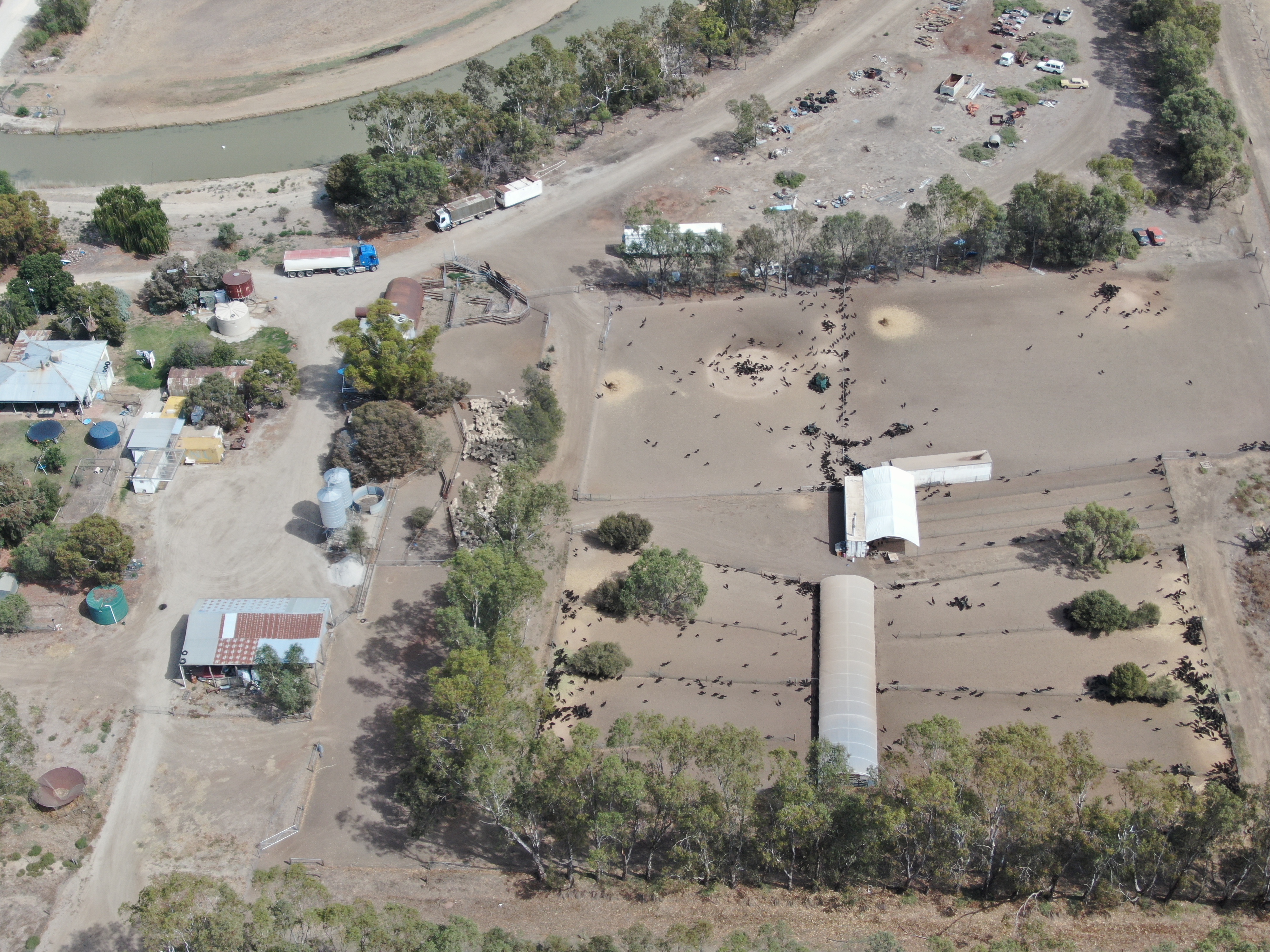
Emus are primarily farmed in Australia for their meat, skin and in particular, their oil. A very small quantity of carved eggs and emu feathers are also sold. The first emu farm began in Western Australia in 1970, however emu farming began operating commercially in 1987 when relevant legislation was passed. The first slaughtering of the farmed emus happened in 1990. By 1994, all Australian States were permitted to commercially farm emus.
Demand for emu products is growing; despite a 'bust' from 2000 to 2007, a period in which many farmers went broke. Demand is growing for emu oil capsules in particular, which is sold as an anti-inflammatory. The oil is taken from the fat of the emu post slaughter. Emus, like camels, have fat stores on their back for survival. Farms like Emu Heaven in Queensland specifically advertise emu oil as their primary product.
Despite being a national emblem, and on Australia's coat of arms, emus are legally farmed and slaughtered. Cosmetic and pharmaceutical companies continue to make the most profit from the exploitation of the emu.
Declawing
Toe amputation, or "declawing", is a legal, standard industry practice on emu farms. Day-old emus will use a hot blade to remove the end of day-old emus' toes to "decrease skin injury caused by claws and to reduce stereotypic aggression". Declawing is also believed to minimise the risk of injuries to handlers during transport to slaughter. Australian standards indicate that declawing can be performed using shearers.
Model code
The Australian 'Model code of practice for the welfare of animals: husbandry of captive-bred emus' is a voluntary code under the Animal Care and Protection Act 2001 which does little to protect the emu.
The exact number of Emus killed in Australia each year is difficult to source due to the Australian Bureau of Statistics putting both ostriches and emus in an 'other' bucket.
Slaughter
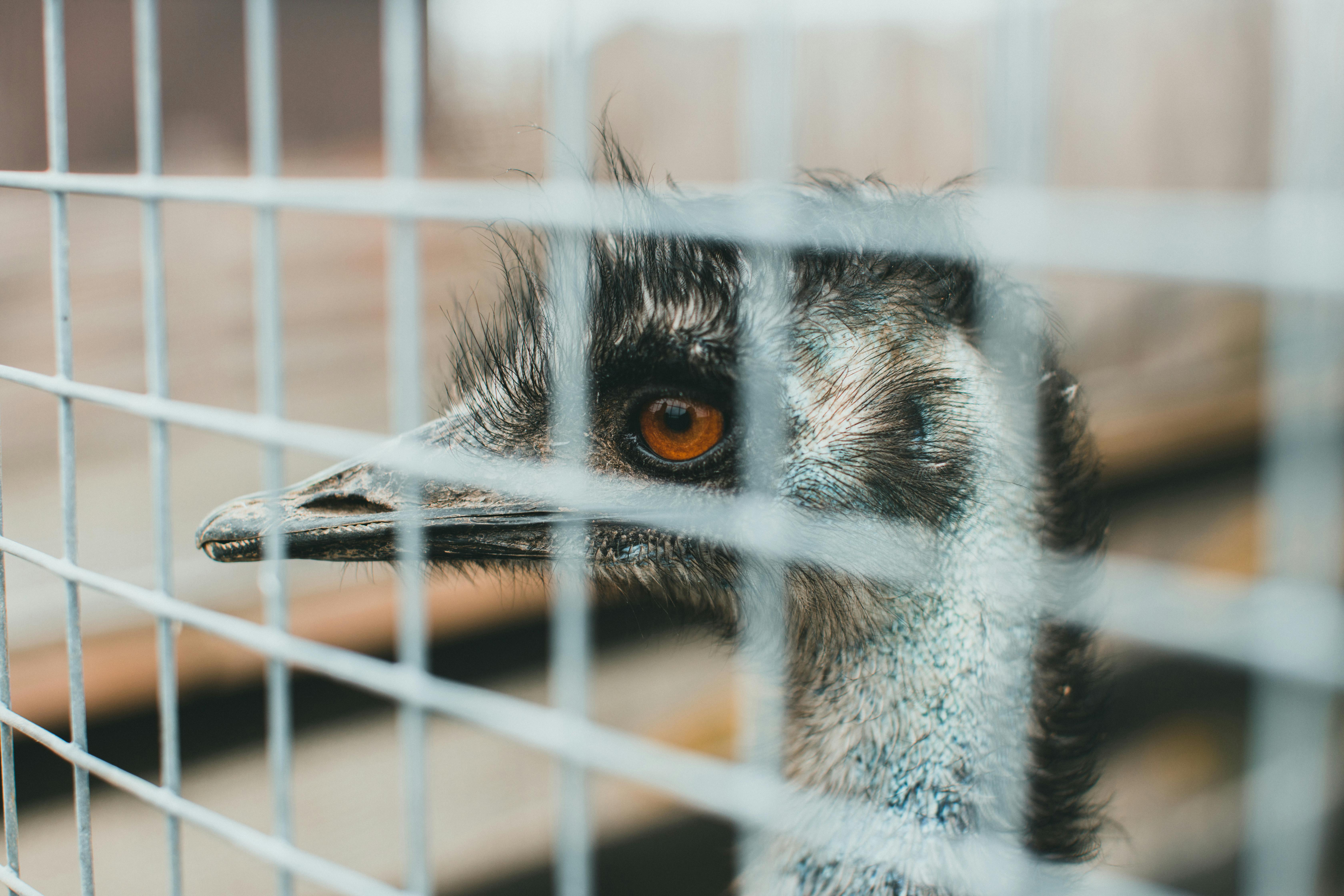
Emus are gentle birds that will resist every step of the way to the slaughterhouse as they are captured, bullied and terrorised. They are shoved onto trucks, deprived of food and water (non-mandatory legislation permits up to 24-hours) then taken to the slaughterhouse. The transportation creates incredible stress on the birds as they're crammed together – barely able to breathe, let alone move.
Upon arrival, they are herded off the trucks to the kill floor. They are then shot with a captive bolt (rendered unconscious) or electrically stunned then hung upside-down before their throats are cut – still alive as their blood begins to drain. These are considered the 'approved' and 'humane' methods in Australia. The terrified emus often die in fear via a slow, lingering, painful death.
The emu farmers Co, or Longview Emu farm, is the largest emu farm in the world. In 2020, an outbreak of avian influenza in August 2020, led to a planned cull of the 6000 emus. In recent years, they have built an onsite processing facility, allowing them to kill birds on their property. Their annual slaughter season runs from January - March.
Lifespan
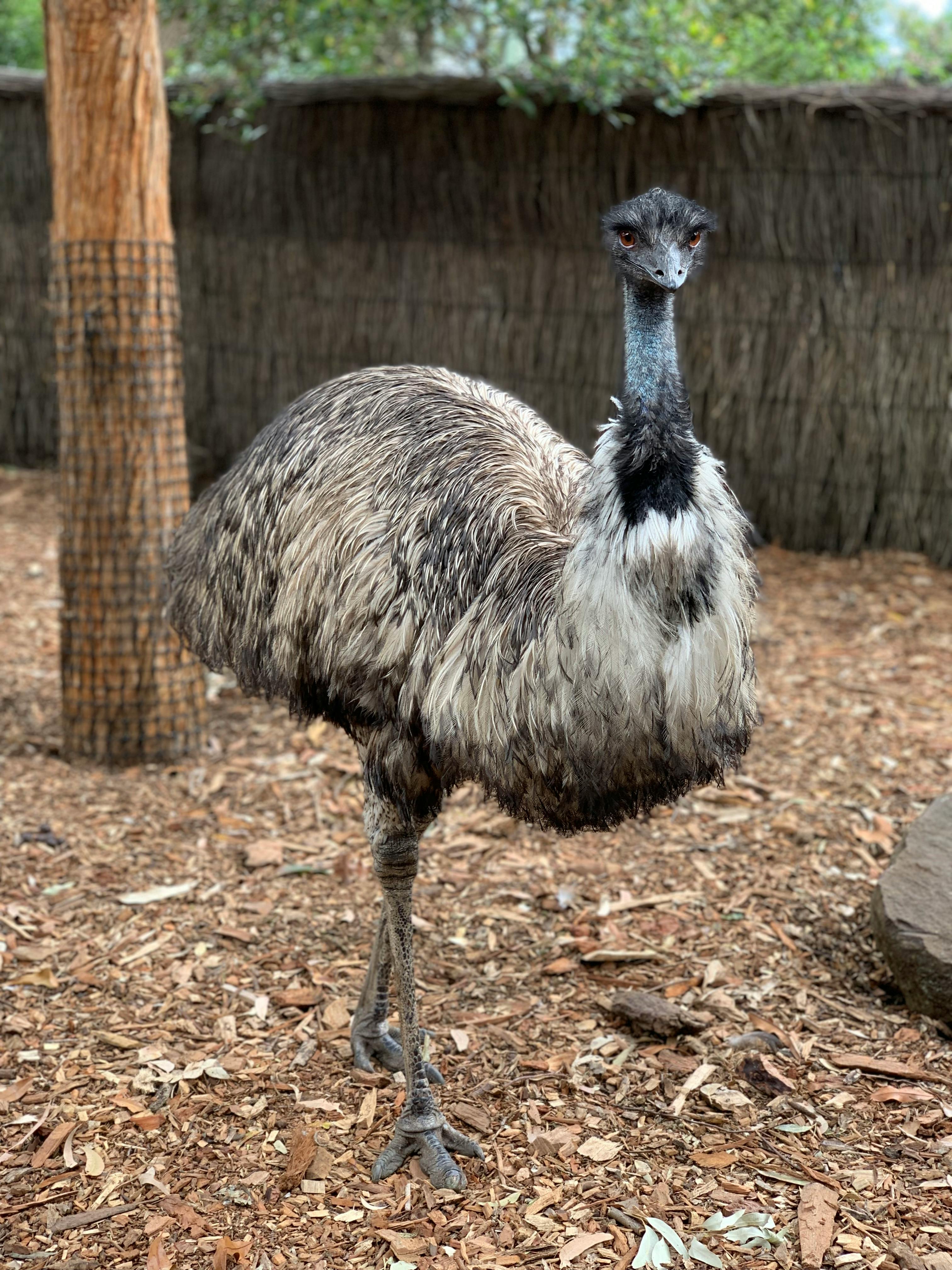
An emu can live up to 60 years of age yet on farms, they're ready to slaughter before reaching just two years of age. In the wild, they're capable or traversing long distances, eating insects, leaves, seeds and fruit if they can find it. If food is scarce, they can tap into the fat reserves stored on their back. An emu can go weeks without eating if there's enough in their reserves.
Emus have an uncanny ability to detect water from hundreds of kilometres away – they're a true survivor made for Australian conditions. Emus will typically perform a mass migration every seven years – on the hunt for greener pastures. Western Australia's barrier fence (also known as the 'rabbit-proof fence or dingo fence) snares Emus and prevents some migrations, along with snaring other wildlife left on the fence to die of heat exhaustion, dehydration or starvation.
Emus in the wild
New parents help their baby hatch by using their beaks to break the shell after 4-6 weeks of incubation. The male will rarely leave the nest, losing between 5 and 10 kilograms as they deprive themselves of food to protect their family. Then, the family will stay together for up to a couple of years, ensuring their baby can take care of themselves. Whilst emus are placid, they will attack any predator that comes near their chick.
On commercial farms families are often separated kept together and lives are cut short. The natural, maternal instincts of the emus can't be expressed as they have both their family and lives torn from them.
A bounty system was introduced for killing emus from the 1920's and in 1934, with the military getting involved in killing them (their migration was now 'threatening' food crops'), 57,034 Emu bounties were collected. While this bounty is long gone, 'approved killings' take place regularly. For example, in 2002, 7,000 emus were killed in Western Australia alone (while a protected species, emus can still be killed on private property with an appropriate license).