
Kangaroos
Macropods are a family of marsupials which includes kangaroos, wallabies, and wallaroos. They are killed (or 'harvested', as the industry calls it) in Australia for their meat, skin, and fur, but they are caught from the wild rather than farmed.
.jpg)
The ethics of wild kangaroo, wallaby, and wallaroo slaughter are widely debated, even within the industry, as the animals are killed by being shot in the head with a rifle. Death requires the bullet to destroy the vital areas of the brain. However, even when both the shooter and animal are stationary, achieving this necessary level of accuracy can be difficult, and any inaccurate shots cause prolonged suffering.
In addition, many joeys die each year as collateral when their mothers are shot, with the National Code of Practice authorising shooters to bludgeon joeys to death. Any joeys not killed by shooters are left to starve or face predation.
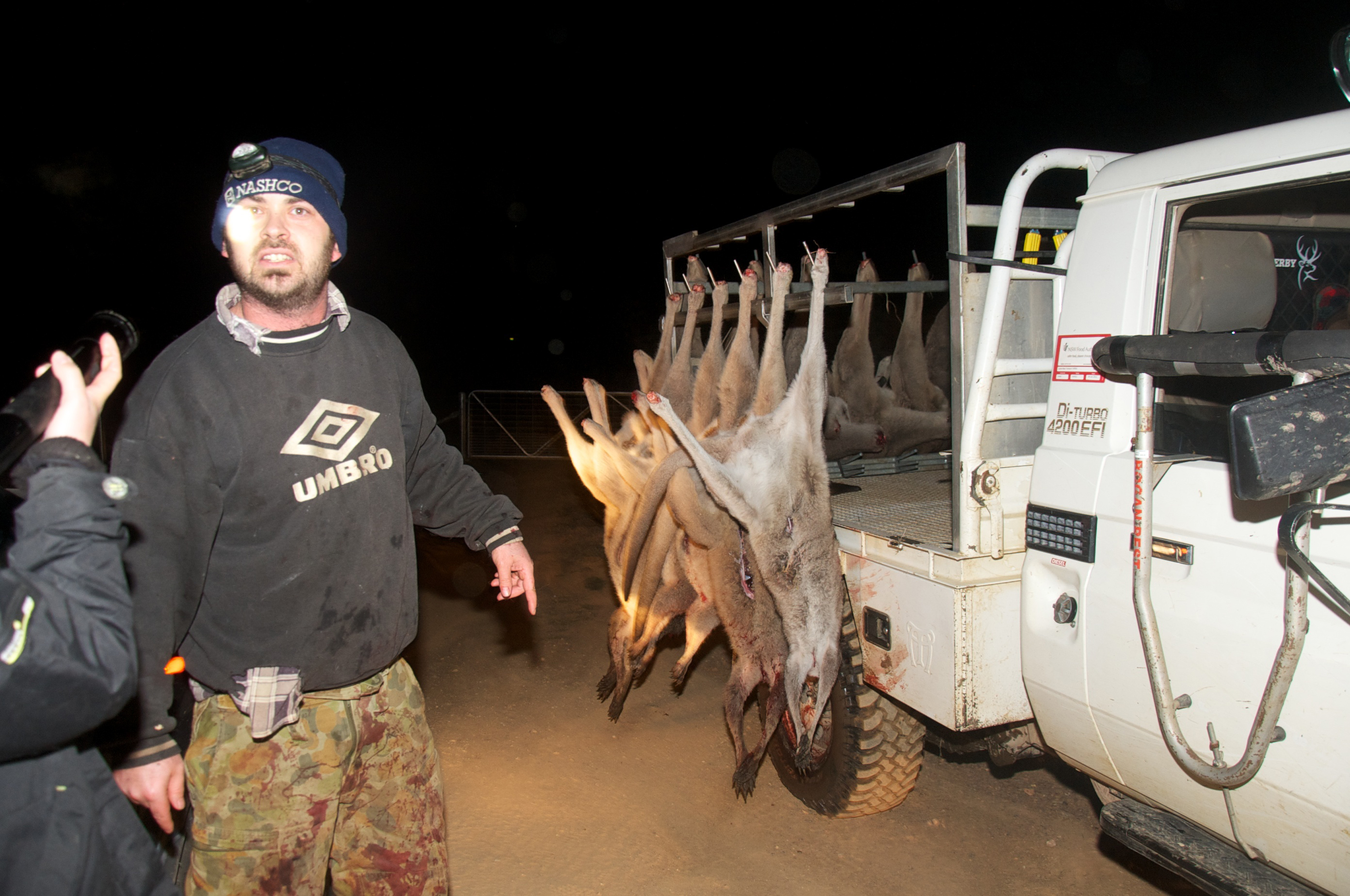
In 2023, a total of 1,361,679 macropods were killed in five states of Australia for commercial use. While kangaroos were the most frequently killed, wallabies and wallaroos were also included in this figure.
This consisted of:
Victoria: 72,232
Western Australia: 81,938
South Australia: 100,088
New South Wales: 509,671
Queensland: 597,750
.jpg)
Wallabies are also killed commercially in Tasmania for their meat, skin, and fur. In 2025, Tasmanian abattoir Lenah Game Meats applied to extend their annual license to export the flesh and fur and skin of 200,000 wallabies
Kangaroo meat is both sold in Australia and exported overseas to approximately 60 countries.