
Fish and marine life

Last updated 28 November 2025

There is ever-emerging evidence that fish are complex, intelligent and sentient beings. Fish are capable of time-place learning, where they link events with both location and time of occurrence. Animals, humans use this to decide to visit or avoid places at certain times, based on their previous experiences. 
For many, fish are difficult animals to relate to and empathise with because they are so starkly different to humans and other land-based animals. Fish respond to pain in ways that are unfamiliar to humans; they don't vocalise like other animals, and try to escape pain in ways different to us. It is widely accepted among scientific communities that fish are capable of feeling pain. Despite our differences, fish are deserving of our respect and desperately need our protection. Due to commercial fishing and climate breakdown we currently face the very real threat of fishless oceans by 2050.

By-catch

https://pmc.ncbi.nlm.nih.gov/articles/PMC10452961/#:~:text=After%20exhaustion%2C%20fish%20are%20then%20exposed%20to%20hypoxic%20or%20anoxic%20environments%20and%20often%20increased%20temperatures%20when%20they%20are%20handled%20out%20of%20the%20cooler%20water.By-catch refers to all the unintended marine life caught by commercial fishing vessels. Marine animals often become trapped in the various nets used in large-scale fishing operations.

Do fish feel pain?

There has been much debate surrounding the ability of fish and other marine animals to feel pain. Land animals indicate pain in a way that is obvious to humans, often vocalising and trying desperately to escape the source of said pain. Fish and other marine animals react to pain in a way that is starkly different to humans and other land animals, consequently leading many to believe they simply don’t experience pain. 

Farmed fish

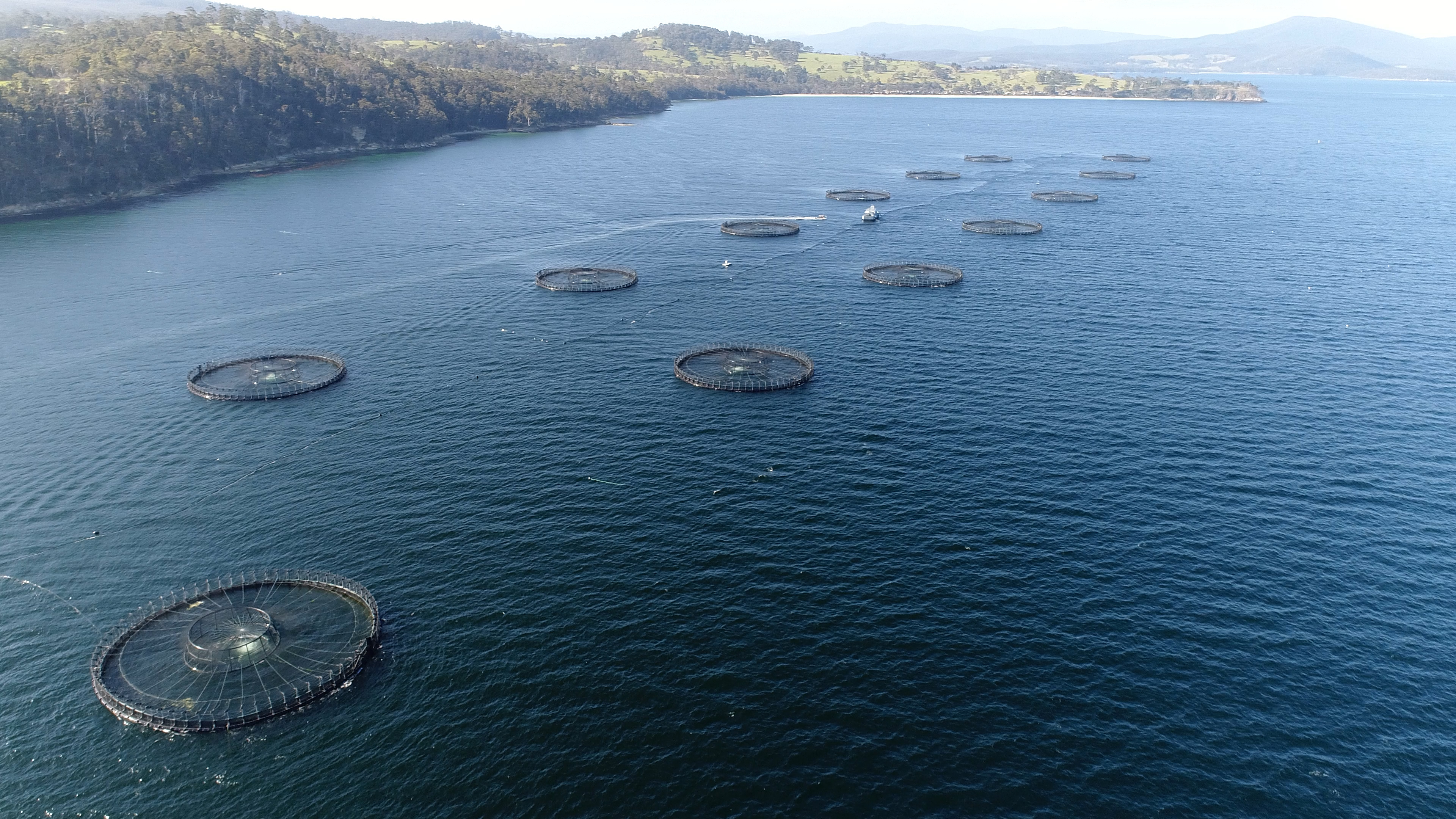
According to the United Nations, in 2018 the raising of underwater, factory-farmed fish was at a record high with 114.5 million tonnes of live weight produced, accounting for 53% of fish products produced - the farmgate value of which is a staggering 263.6 billion USD. 

Wild-caught fish

It is estimated that as many as 2.74 trillion fish are caught and killed every year. To put this into perspective, that is nearly the same amount of fish being caught and killed every day as there are people on the planet.

Crustaceans

Crustaceans (including crayfish, lobsters, crabs, and prawns), are invertebrate animals with hard exoskeletons. Large crab in a tank (Mark Lee Fish Farm, SA). Photo: Farm Transparency Project Studies show that crayfish, lobsters, crabs, and prawns have complex social interactions and the ability to recognise individuals. Lobsters can live for over 100 years, but are commonly captured and ki...